The sweet science of sugar
We have probably all heard at some point in our lives that sugar is bad for our health. We’ve been told that it can contribute to diabetes and other diseases. But what does it actually do to our brains and bodies, and why is it so bad for our health?
Sugar as a source of energy
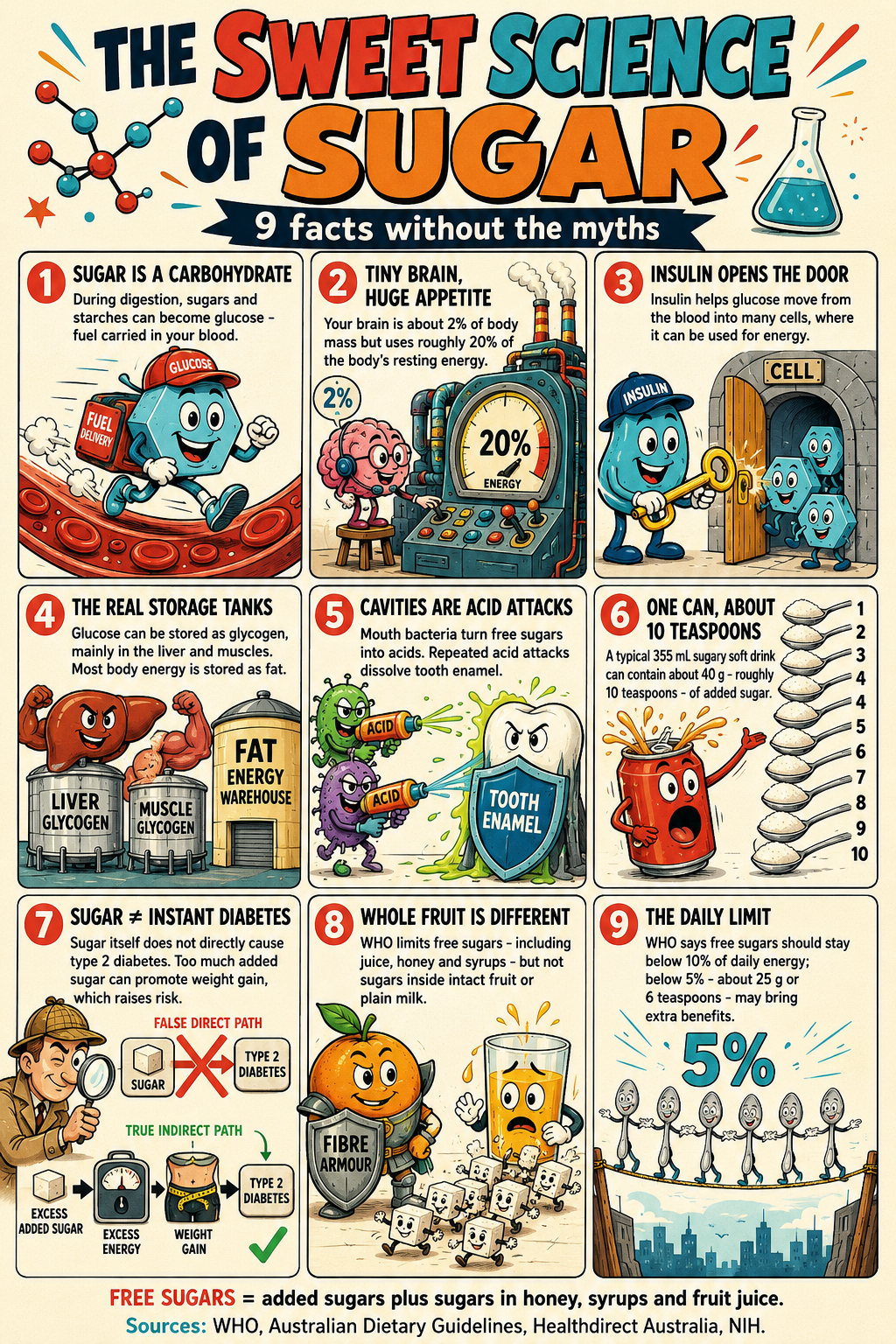
Too much sugar is bad for our health, but it is also a source of energy. Sugar is present in everything we eat, either added to or naturally present in our food. When we eat something containing sugar, it is broken down and becomes glucose. Because it is a small molecule, it is quickly absorbed into the bloodstream and gets into our cells. These cells use glucose to produce the energy they need to function or transform it into glycogen for storage.
For sugar to get into the brain, it has to pass through the blood-brain barrier. This is designed to protect the brain from harmful chemicals by only allowing certain things to enter along with the bloodstream. When glucose enters the brain, it is broken down into simpler molecules and used for energy. The brain uses a surprisingly large amount of energy, 20% of the total used by the body, despite making up only 2% of the total body weight.
Too much of something is never good
Our bodies need sugar as a source of energy but there can be some pretty serious consequences if you have too much of it. The problems start before sugar even gets inside the body. There can be a lot of them so here is a short list of what could happen.
Tooth problems. Bacteria that cause cavities break down sugar into acid, which causes them to multiply.
Liver trouble. A buildup of fat caused by sugar can lead to liver scarring and cut off blood flow.
Heart stress. Too much sugar can cause arteries to become thicker and stiffer than usual, putting more pressure on the heart.
Increased weight. This is a well-known fact that sugar increases body fat because that is where it is stored as glycogen.
These are just a few of the main effects sugar can have if you eat too much of it.
Don’t forget the brain
We’ve talked about the body, but the brain is a whole different story. Many of our brain’s reactions to sugar are caused by evolution. Our ancestors were scavengers, and sugary foods were an excellent source of energy while bitter or sour foods were often unripe or poisonous. This means that our brains release dopamine, the brain’s reward hormone, when we eat sugar. Sugar also causes the brain structure to change. If you eat a lot of sugar, the brain gets used to it, rewiring itself so you need to eat more of it to get a dopamine hit. This leads to sugar addiction and cravings, leading to a sugar addiction. But that’s not all it can do to the brain. There are quite a few other things it does.
Mood swings and increased anxiety. High levels of sugar disrupt the processing of emotions, leading to anxiety, irritability and an unstable mood.
Learning and memory. Sugar reduces the production of certain chemicals associated with memory and learning.
Higher risk of mental illness. Sugar leads to an increased risk of diseases like dementia and Alzheimer's disease.
What all this means
So, now we know what sugar does to the brain and body, as well as why we need sugar for energy. The key thing to keep in mind here is that too much of something is never good and can often do quite a bit of damage to our health. The best way to figure out how much is too much is through education. Understanding the science behind sugar shows us how our habits affect our health and helps us stay healthy in the long run.